The food industry has always been one of the most stable and profitable industries in the world. People may postpone buying luxury products during uncertain economic conditions, but they continue spending money on quality food every day. As lifestyles become busier, the demand for convenient, healthy, homemade, and ready-to-eat meals continues to grow rapidly. This creates countless opportunities for aspiring entrepreneurs to build successful food businesses with different investment levels.
Whether you want to launch a home kitchen, cloud kitchen, bakery, café, food truck, catering company, snack brand, or food manufacturing unit, there is a business model that matches your budget, skills, and long-term goals. Many successful food brands started from a small home kitchen with just a few customers before becoming nationally recognized businesses.
This comprehensive guide covers the best food business ideas, startup costs, profit margins, expected earnings, licensing requirements, marketing strategies, common mistakes, and practical steps to help you build a profitable food business in 2026. By the end of this guide, you will have a clear roadmap for choosing the right idea and turning it into a sustainable business.
Why Starting a Food Business Is a Smart Choice in 2026
The food industry continues to evolve with changing consumer preferences, technology, and delivery platforms. Today’s entrepreneurs have more opportunities than ever before because customers are willing to pay for convenience, quality, and unique dining experiences.
Some of the biggest reasons why food businesses continue to perform well include:
- Rising demand for healthy and organic foods
- Growth of online food delivery platforms
- Increasing popularity of cloud kitchens
- Busy lifestyles encouraging ready-to-eat meals
- Growing demand for homemade food
- Expansion of premium bakery products
- Strong demand for regional and authentic cuisines
- Social media driving food trends and viral products
- AI-powered restaurant and inventory management
- Easy access to digital payment systems
Unlike many industries, food businesses can start small and gradually expand. Many successful brands began from a single kitchen or food cart before opening multiple outlets.
Is the Food Business Profitable?
Yes. However, profitability depends on several factors such as product quality, pricing, location, operational efficiency, and marketing.
Different food businesses have different profit margins.
| Business Type | Approximate Investment | Gross Profit Margin | Scalability |
|---|---|---|---|
| Home Bakery | Low | High | High |
| Cloud Kitchen | Medium | High | Very High |
| Tea Stall | Very Low | Very High | Medium |
| Restaurant | High | Medium | High |
| Food Truck | Medium | High | High |
| Pickle Business | Low | Very High | Very High |
| Chocolate Business | Low | High | High |
| Spice Business | Medium | High | Very High |
| Catering Business | Medium | High | High |
| Healthy Meal Delivery | Medium | High | Very High |
The right business model can generate consistent monthly income while allowing you to expand into new products and markets over time.
Benefits of Starting a Food Business
Starting a food business offers several advantages over many other businesses.
High Market Demand
Food is a necessity rather than a luxury. This creates year-round demand across different customer segments.
Multiple Business Models
You can choose from:
- Home kitchen
- Cloud kitchen
- Restaurant
- Café
- Bakery
- Food truck
- Catering
- Manufacturing
- Online food store
- Subscription meal service
Flexible Investment Options
You can start with as little as ₹20,000 or invest several crores depending on your ambitions.
Unlimited Product Expansion
A bakery can later sell cookies, chocolates, gift hampers, desserts, baking classes, and packaged products.
Strong Brand Loyalty
Customers often become repeat buyers when they enjoy your food quality and service.
Digital Growth Opportunities
Instagram, YouTube, WhatsApp Business, and food delivery platforms make it easier to acquire customers without spending heavily on traditional advertising.
Who Should Start a Food Business?
One of the biggest advantages of the food industry is that almost anyone with passion and dedication can succeed.
Housewives
Many successful businesses started with homemade recipes passed down through generations.
Suitable ideas include:
- Pickles
- Papad
- Cakes
- Bakery
- Homemade snacks
- Tiffin service
Students
Students can start part-time businesses with minimal investment.
Examples include:
- Sandwich stall
- Coffee cart
- Smoothie business
- Homemade desserts
- Online bakery
- Food content creation
Working Professionals
Many professionals start cloud kitchens or packaged food brands while keeping their full-time jobs.
Retired Individuals
Retirees can leverage years of cooking experience to build profitable businesses.
Farmers
Farmers can increase profits by selling value-added food products instead of raw produce.
Examples include:
- Organic flour
- Cold-pressed oils
- Honey
- Jaggery
- Spice powders
Professional Chefs
Chefs can launch premium restaurants, catering services, or culinary academies.
Women Entrepreneurs
Food businesses offer flexible working hours and scalable opportunities, making them ideal for women entrepreneurs.
Couples
Couples can divide responsibilities between cooking, marketing, finance, customer support, and delivery management.
How to Choose the Right Food Business
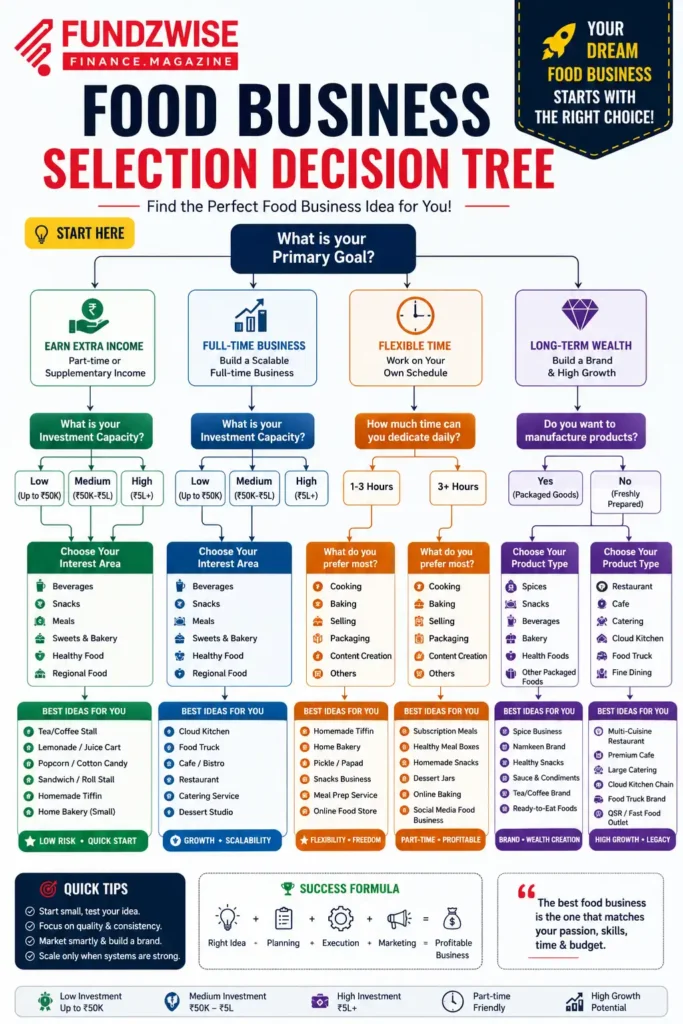
Choosing the wrong business can lead to unnecessary losses. Before investing, evaluate your resources and goals.
Consider Your Budget
Your investment determines which business models are feasible.
| Budget | Recommended Businesses |
|---|---|
| Up to ₹25,000 | Tea Stall, Lemonade Cart, Homemade Pickles |
| ₹25,000–₹50,000 | Tiffin Service, Popcorn Business, Bakery from Home |
| ₹50,000–₹1 Lakh | Juice Shop, Chocolate Business, Spice Business |
| ₹1–5 Lakh | Cloud Kitchen, Café Kiosk, Food Truck |
| ₹5–20 Lakh | Restaurant, Large Bakery, Catering Company |
| ₹20 Lakh+ | Premium Restaurant, Food Manufacturing Unit |
Assess Your Skills
Ask yourself:
- Do you enjoy cooking?
- Can you manage people?
- Are you comfortable selling products?
- Can you handle customer complaints?
- Do you understand basic accounting?
- Are you willing to learn digital marketing?
Identify Market Demand
Research your local area before selecting any business.
Look for:
- Busy commercial areas
- Office locations
- Colleges
- Residential societies
- Tourist destinations
- Delivery demand
Study Your Competition
Visit existing businesses and observe:
- Pricing
- Menu
- Packaging
- Customer service
- Waiting time
- Hygiene
- Reviews
- Peak business hours
Instead of copying competitors, identify gaps where you can offer something better.
Evaluate Profit Margins
Some businesses generate higher profits than others.
| Business | Typical Profit Potential | Repeat Customers |
|---|---|---|
| Cakes | High | High |
| Tea | Very High | Very High |
| Coffee | Very High | Very High |
| Healthy Meals | High | High |
| Ice Cream | Medium | Medium |
| Pickles | High | Medium |
| Catering | High | Medium |
| Bakery | High | High |
Think About Scalability
Choose a business that can grow over time.
For example:
Home Bakery → Local Bakery → Multiple Outlets → Packaged Products → Franchise
Cloud Kitchen → Multiple Brands → Multiple Cities
Tea Stall → Café Chain
Pickle Business → Online Store → Supermarkets → Export Business
Food Business Selection Checklist
Before finalizing your business idea, ensure that you can answer “Yes” to most of these questions.
| Question | Yes/No |
|---|---|
| Is there enough demand? | □ |
| Do I enjoy this type of business? | □ |
| Can I afford the investment? | □ |
| Is the profit margin attractive? | □ |
| Can I manage operations daily? | □ |
| Do I understand my target customers? | □ |
| Can I differentiate from competitors? | □ |
| Is there potential for long-term growth? | □ |
| Can I market this business online? | □ |
| Am I prepared to obtain the required licenses? | □ |
If you answer “Yes” to most of these questions, you are on the right path to selecting a sustainable food business.
Food Business Idea Finder Quiz
Answer a few quick questions and find the best food business idea for your budget, skills, and goals.
Best Home-Based Food Business Ideas
Starting from home is one of the safest ways to enter the food industry. It reduces rental expenses and allows you to test your products before expanding.
1. Home Bakery Business
A home bakery is one of the most profitable food business ideas for people who enjoy baking. Customers increasingly prefer customized cakes, cookies, cupcakes, brownies, and artisan breads over mass-produced alternatives.
Investment: ₹50,000–₹2,00,000
Expected Monthly Revenue: ₹80,000–₹5,00,000+
Profit Margin: 35–60%
Difficulty Level: Medium
Best For:
- Housewives
- Bakers
- Students
- Couples
Products You Can Sell:
- Birthday cakes
- Wedding cakes
- Cupcakes
- Brownies
- Cookies
- Donuts
- Artisan bread
- Dessert jars
- Macarons
- Muffins
Advantages
- Low startup cost
- High repeat customers
- Excellent social media potential
- Custom orders increase profits
- Easy to expand into premium products
Challenges
- Requires baking skills
- Seasonal demand fluctuations
- Strict quality control
- Time-sensitive deliveries
How to Start
- Choose your specialty.
- Invest in a quality oven and baking tools.
- Create a small product catalog.
- Register your business and obtain necessary food licenses.
- Build an Instagram page with professional photos.
- Partner with local delivery services.
- Encourage customer reviews and referrals.
Expert Tip: Offer personalized cakes for birthdays, anniversaries, and festivals. Customized products often command significantly higher margins than standard bakery items.
2. Tiffin Service Business
The growing number of working professionals, students, and elderly people has created strong demand for healthy home-cooked meals. A tiffin service requires relatively low investment and generates recurring revenue through subscriptions.
Investment: ₹20,000–₹1,00,000
Expected Monthly Revenue: ₹60,000–₹4,00,000+
Profit Margin: 30–50%
Difficulty Level: Easy to Medium
Best For:
- Home cooks
- Families
- Women entrepreneurs
Popular Meal Options
- Vegetarian lunch
- Non-vegetarian lunch
- Diet meals
- High-protein meals
- Corporate meal plans
- Student meal plans
Advantages
- Predictable recurring income
- Loyal customer base
- Low marketing costs through word of mouth
- Opportunity to scale with multiple delivery routes
Challenges
- Maintaining consistent taste and quality
- Timely delivery
- Managing subscriptions
- Controlling food waste
How to Start
- Design weekly meal plans.
- Source fresh ingredients from reliable suppliers.
- Use hygienic, eco-friendly packaging.
- Offer subscription discounts for monthly customers.
- Promote your service through local WhatsApp groups, apartment communities, and social media.
Expert Tip: Introduce flexible meal plans, such as low-calorie, diabetic-friendly, or office lunch subscriptions, to cater to different customer needs and improve customer retention.
3. Homemade Pickle Business
The homemade pickle business remains one of the most profitable food business ideas because pickles have a long shelf life, require relatively low investment, and enjoy consistent demand throughout the year. Traditional recipes often attract customers who prefer authentic homemade flavors over mass-produced brands.
Investment: ₹15,000–₹80,000
Expected Monthly Revenue: ₹50,000–₹3,50,000+
Profit Margin: 40–70%
Difficulty Level: Easy
Best For
- Housewives
- Retired individuals
- Farmers
- Women entrepreneurs
Popular Products
- Mango pickle
- Lemon pickle
- Mixed vegetable pickle
- Garlic pickle
- Green chilli pickle
- Stuffed red chilli pickle
- Ginger pickle
- Amla pickle
- Bamboo shoot pickle
- Regional specialty pickles
Advantages
- High profit margins
- Long shelf life
- Easy online selling
- Repeat customers
- Low inventory losses
- Suitable for exports
Challenges
- Maintaining consistent taste
- Quality packaging
- Preservative management
- Seasonal raw material prices
How to Start
- Finalize 5–10 signature recipes.
- Source fresh ingredients.
- Standardize measurements.
- Design attractive packaging.
- Register your brand.
- Sell through Instagram, WhatsApp, marketplaces, and local grocery stores.
- Encourage customers to leave reviews.
Expert Tip
Offer combo packs and festival gift hampers to increase your average order value.
4. Homemade Chocolate Business
The premium chocolate market continues to grow rapidly. Customers increasingly prefer handcrafted chocolates for birthdays, weddings, festivals, and corporate gifting.
Investment: ₹25,000–₹1,50,000
Expected Monthly Revenue: ₹75,000–₹5,00,000+
Profit Margin: 45–70%
Difficulty Level: Medium
Best For
- Students
- Women entrepreneurs
- Home bakers
- Creative entrepreneurs
Products You Can Sell
- Dark chocolates
- Milk chocolates
- Truffles
- Dry fruit chocolates
- Sugar-free chocolates
- Corporate gift boxes
- Personalized chocolates
- Festival hampers
- Premium chocolate bouquets
Advantages
- Excellent gift market
- Premium pricing
- Strong branding opportunities
- High repeat orders
Challenges
- Temperature-sensitive storage
- Premium packaging costs
- Seasonal demand fluctuations
Growth Strategy
Start with customized chocolate boxes and gradually launch branded premium collections.
5. Homemade Spice Business
Consumers increasingly prefer freshly ground spices without artificial colors or preservatives. This makes the spice business one of the most scalable food manufacturing opportunities.
Investment: ₹40,000–₹2,00,000
Expected Monthly Revenue: ₹1,00,000–₹8,00,000+
Profit Margin: 30–60%
Difficulty Level: Medium
Popular Products
- Turmeric powder
- Red chilli powder
- Coriander powder
- Garam masala
- Kitchen King masala
- Biryani masala
- Chaat masala
- Tea masala
- Pav Bhaji masala
- Regional spice blends
Advantages
- Daily household demand
- Long shelf life
- Easy online selling
- Wholesale opportunities
- Export potential
Challenges
- Strong competition
- Branding requirements
- Food quality standards
Expert Tip
Launch regional spice collections inspired by Punjabi, South Indian, Gujarati, Bengali, and Rajasthani cuisines to stand out.
6. Homemade Papad Business
Papad remains a staple food item in many households and restaurants. It requires simple equipment and can generate attractive margins.
Investment: ₹20,000–₹1,00,000
Expected Monthly Revenue: ₹60,000–₹3,00,000+
Profit Margin: 40–65%
Difficulty Level: Easy
Popular Variants
- Urad papad
- Moong papad
- Rice papad
- Masala papad
- Garlic papad
- Millet papad
Advantages
- Easy manufacturing
- High demand
- Good shelf life
- Bulk orders from restaurants
Marketing Ideas
- Local grocery stores
- Supermarkets
- Restaurants
- Amazon
- Flipkart
- Own website
7. Homemade Namkeen Business
Snacking has become a daily habit for millions of people. Regional namkeen varieties enjoy massive demand across India.
Investment: ₹40,000–₹2,50,000
Expected Monthly Revenue: ₹1,50,000–₹10,00,000+
Profit Margin: 35–60%
Popular Products
- Bhujia
- Mixture
- Sev
- Chakli
- Banana chips
- Potato chips
- Murukku
- Chivda
- Roasted snacks
Advantages
- Huge market
- Bulk orders
- Online selling
- Attractive packaging
- Gift packs
Challenges
- Maintaining freshness
- Oil quality management
- Inventory control
8. Healthy Snack Business
Health-conscious consumers are looking for guilt-free snacks with clean ingredients. This category continues to grow every year.
Investment: ₹50,000–₹3,00,000
Expected Monthly Revenue: ₹2,00,000–₹12,00,000+
Profit Margin: 40–65%
Trending Products
- Protein bars
- Granola
- Trail mix
- Roasted makhana
- Seed mixes
- Millet snacks
- Baked chips
- Dry fruit mixes
- Oats cookies
Target Customers
- Gym members
- Office professionals
- Parents
- Students
- Senior citizens
Expert Tip
Highlight nutritional values clearly on your packaging to build trust and attract health-conscious buyers.
9. Homemade Jam and Jelly Business
Homemade fruit spreads appeal to customers looking for natural alternatives without artificial preservatives.
Investment: ₹25,000–₹1,50,000
Expected Monthly Revenue: ₹75,000–₹4,00,000+
Profit Margin: 35–60%
Popular Products
- Strawberry jam
- Mango jam
- Pineapple jam
- Mixed fruit jam
- Orange marmalade
- Apple jelly
- Berry spreads
Advantages
- Attractive packaging
- Gift opportunities
- Online sales
- Premium pricing
10. Homemade Sauce and Chutney Business
Consumers love regional sauces and traditional chutneys that are difficult to find in supermarkets.
Investment: ₹30,000–₹1,50,000
Expected Monthly Revenue: ₹80,000–₹5,00,000+
Popular Products
- Mint chutney
- Tamarind chutney
- Garlic sauce
- Schezwan sauce
- Pizza sauce
- Pasta sauce
- Green chutney
- Coconut chutney powder
Growth Opportunity
Introduce preservative-free gourmet sauces for premium customers.
11. Peanut Butter Business
Protein-rich foods continue to gain popularity among fitness enthusiasts and families.
Investment: ₹60,000–₹3,00,000
Expected Monthly Revenue: ₹2,00,000–₹10,00,000+
Profit Margin: 35–55%
Variants
- Crunchy
- Smooth
- Chocolate
- Honey
- High-protein
- Almond butter
- Cashew butter
12. Homemade Ice Cream Business
Premium handcrafted ice cream brands continue to grow because customers enjoy unique flavors and natural ingredients.
Investment: ₹1,00,000–₹5,00,000
Expected Monthly Revenue: ₹2,50,000–₹15,00,000+
Popular Flavors
- Belgian chocolate
- Mango
- Strawberry
- Pistachio
- Tender coconut
- Coffee
- Cookies and cream
- Seasonal fruit flavors
13. Frozen Food Business
Busy professionals increasingly purchase frozen foods for convenience.
Investment: ₹2–10 lakh
Popular Products
- Frozen momos
- Frozen parathas
- Frozen cutlets
- Frozen pizzas
- Frozen snacks
- Frozen kebabs
- Frozen desserts
Advantages
- Growing market
- Wholesale opportunities
- Export potential
14. Homemade Dry Fruit Gift Box Business
Premium gifting continues to grow during festivals, weddings, and corporate events.
Investment: ₹50,000–₹2,00,000
Expected Monthly Revenue: ₹1,50,000–₹8,00,000+
Popular Products
- Almond boxes
- Mixed dry fruits
- Gourmet nuts
- Premium gift hampers
- Healthy snack hampers
15. Organic Honey Business
Natural honey enjoys steady demand due to increasing health awareness.
Investment: ₹75,000–₹5,00,000
Expected Monthly Revenue: ₹2,00,000–₹12,00,000+
Expansion Opportunities
- Flavored honey
- Herbal honey
- Raw honey
- Honey gift packs
- Beeswax products
16. Homemade Tea Blend Business
Tea lovers increasingly seek premium and wellness-focused blends.
Investment: ₹30,000–₹1,50,000
Products
- Masala tea
- Herbal tea
- Green tea blends
- Hibiscus tea
- Chamomile tea
- Detox tea
- Immunity tea
Profit Margin: 45–70%
17. Specialty Coffee Business
The premium coffee market is expanding rapidly among young professionals and urban consumers.
Investment: ₹75,000–₹5,00,000
Popular Products
- Coffee beans
- Ground coffee
- Cold brew concentrates
- Flavored coffee
- Gift boxes
Comparison of Home-Based Food Business Ideas
| Business | Investment | Monthly Revenue Potential | Profit Margin | Difficulty | Scalability |
|---|---|---|---|---|---|
| Home Bakery | ₹50K–₹2L | ₹80K–₹5L+ | 35–60% | Medium | ⭐⭐⭐⭐⭐ |
| Tiffin Service | ₹20K–₹1L | ₹60K–₹4L+ | 30–50% | Easy | ⭐⭐⭐⭐ |
| Pickle Business | ₹15K–₹80K | ₹50K–₹3.5L+ | 40–70% | Easy | ⭐⭐⭐⭐⭐ |
| Chocolate Business | ₹25K–₹1.5L | ₹75K–₹5L+ | 45–70% | Medium | ⭐⭐⭐⭐⭐ |
| Spice Business | ₹40K–₹2L | ₹1L–₹8L+ | 30–60% | Medium | ⭐⭐⭐⭐⭐ |
| Papad Business | ₹20K–₹1L | ₹60K–₹3L+ | 40–65% | Easy | ⭐⭐⭐⭐ |
| Namkeen Business | ₹40K–₹2.5L | ₹1.5L–₹10L+ | 35–60% | Medium | ⭐⭐⭐⭐⭐ |
| Healthy Snacks | ₹50K–₹3L | ₹2L–₹12L+ | 40–65% | Medium | ⭐⭐⭐⭐⭐ |
| Frozen Foods | ₹2L–₹10L | ₹3L–₹20L+ | 35–55% | Hard | ⭐⭐⭐⭐⭐ |
| Organic Honey | ₹75K–₹5L | ₹2L–₹12L+ | 35–60% | Medium | ⭐⭐⭐⭐⭐ |
Expert Tips Before Launching a Home-Based Food Business
Before investing your money, keep these best practices in mind:
- Choose one niche instead of selling too many products initially.
- Develop 5–10 signature items that customers remember.
- Use premium, food-grade packaging to build trust.
- Calculate your food cost before setting prices.
- Obtain the necessary food safety licenses before selling.
- Build a strong brand identity with a memorable name and logo.
- Create professional product photos for social media and your website.
- Encourage customer reviews and referrals to grow organically.
- Track inventory and minimize food waste to protect your profit margins.
- Continuously innovate by introducing seasonal flavors and limited-edition products.
Low-Investment Food Business Ideas
One of the biggest myths about the food industry is that you need lakhs of rupees to start. In reality, many successful food entrepreneurs began with a small cart, a rented kitchen, or a simple home setup. As their customer base grew, they expanded into cafés, cloud kitchens, restaurants, and even national brands.
The following food business ideas require relatively low investment while offering attractive profit margins when managed efficiently.
18. Tea Stall Business
Tea is one of the most consumed beverages in India. Millions of cups are sold every day, making it one of the safest food business ideas for beginners.
Investment: ₹20,000–₹1,50,000
Expected Monthly Revenue: ₹1,00,000–₹6,00,000+
Profit Margin: 50–75%
Difficulty Level: Easy
Best For
- First-time entrepreneurs
- Students
- Small-town businesses
- Highway locations
Popular Menu
- Masala tea
- Ginger tea
- Lemon tea
- Green tea
- Elaichi tea
- Kulhad chai
- Coffee
- Snacks
Advantages
- Very low investment
- High customer frequency
- Excellent repeat business
- Easy expansion
Challenges
- Location is critical
- Long working hours
- Seasonal demand fluctuations
Growth Strategy
Start with a tea kiosk, expand into a premium tea café, then launch packaged tea blends under your own brand.
19. Coffee Kiosk Business
Premium coffee consumption has increased significantly among young professionals and college students.
Investment: ₹2–8 lakh
Expected Monthly Revenue: ₹3–15 lakh
Profit Margin: 50–70%
Best Selling Products
- Espresso
- Cappuccino
- Latte
- Cold coffee
- Mocha
- Iced Americano
- Hot chocolate
Expert Tip
Offer free Wi-Fi and attractive interiors to encourage customers to spend more time and order additional items.
20. Juice Bar Business
Health-conscious consumers increasingly prefer fresh fruit juices over carbonated drinks.
Investment: ₹1–5 lakh
Expected Monthly Revenue: ₹2–10 lakh
Profit Margin: 40–65%
Popular Products
- Orange juice
- Watermelon juice
- Sugarcane juice
- Mixed fruit juice
- Protein shakes
- Smoothies
- Detox drinks
Future Opportunity
Add healthy bowls, salads, and protein snacks to increase your average order value.
21. Sandwich Business
Sandwiches remain one of the fastest-selling food products because they are affordable, filling, and suitable for breakfast, lunch, and evening snacks.
Investment: ₹50,000–₹3 lakh
Monthly Revenue: ₹2–12 lakh
Profit Margin: 45–65%
Popular Options
- Veg sandwich
- Grilled sandwich
- Paneer sandwich
- Chicken sandwich
- Cheese sandwich
- Club sandwich
Marketing Tip
Offer combo meals including beverages and fries.
22. Burger Business
Fast food continues to attract customers of all age groups.
Investment: ₹2–8 lakh
Monthly Revenue: ₹4–20 lakh
Profit Margin: 45–60%
Menu Ideas
- Veg burger
- Chicken burger
- Cheese burger
- Mexican burger
- BBQ burger
- Healthy burger
Expansion Strategy
After establishing one outlet, launch franchise opportunities.
23. Momos Business
Momos have become one of the fastest-growing street food businesses across India.
Investment: ₹40,000–₹2 lakh
Monthly Revenue: ₹2–10 lakh
Profit Margin: 50–70%
Popular Products
- Steamed momos
- Fried momos
- Tandoori momos
- Cheese momos
- Chocolate momos
- Kurkure momos
Growth Opportunity
Launch frozen momos for supermarkets and online marketplaces.
24. Pizza Outlet
Pizza remains one of the highest-demand fast-food categories.
Investment: ₹5–20 lakh
Monthly Revenue: ₹5–30 lakh
Profit Margin: 40–60%
Additional Products
- Garlic bread
- Pasta
- Beverages
- Desserts
- Cheese dips
25. Roll and Wrap Business
Quick meals are increasingly popular among office workers and students.
Investment: ₹75,000–₹4 lakh
Monthly Revenue: ₹2–12 lakh
Popular Products
- Paneer roll
- Chicken roll
- Egg roll
- Kebab wrap
- Veg wrap
26. French Fries Business
French fries require low preparation time and generate excellent margins.
Investment: ₹40,000–₹2 lakh
Monthly Revenue: ₹1–8 lakh
Profit Margin: 55–75%
27. Popcorn Business
Popcorn has one of the highest markups in the food industry.
Investment: ₹30,000–₹1 lakh
Monthly Revenue: ₹75,000–₹5 lakh
Flavors
- Butter
- Cheese
- Caramel
- Chocolate
- Peri Peri
- Mexican
28. Cotton Candy Business
Perfect for parks, fairs, shopping malls, and amusement parks.
Investment: ₹25,000–₹75,000
Profit Margin: 60–80%
29. Kulfi Business
Traditional Indian desserts continue to enjoy massive popularity.
Investment: ₹1–5 lakh
Monthly Revenue: ₹2–10 lakh
Popular Flavors
- Kesar pista
- Mango
- Chocolate
- Rabri
- Malai
- Rose
30. Ice Cream Cart
A mobile business model reduces rental expenses.
Investment: ₹1–4 lakh
Monthly Revenue: ₹2–8 lakh
Advantage
Operate at parks, schools, tourist attractions, and events.
31. Lemonade and Beverage Cart
Simple yet highly profitable during summer.
Investment: ₹20,000–₹80,000
Profit Margin: 60–75%
Products
- Lemon soda
- Fresh lime
- Mojito
- Fruit coolers
- Iced tea
32. Biryani Business
Biryani consistently ranks among India’s most ordered food items.
Investment: ₹2–10 lakh
Monthly Revenue: ₹5–25 lakh
Best Selling Variants
- Chicken biryani
- Mutton biryani
- Veg biryani
- Hyderabadi biryani
- Lucknowi biryani
Scaling Opportunity
Launch meal subscriptions and party orders.
33. Street Food Stall
Street food remains one of the easiest ways to enter the food industry.
Popular products include:
- Chaat
- Pani puri
- Dahi bhalla
- Pav bhaji
- Chole bhature
- Kachori
- Samosa
Investment: ₹30,000–₹2 lakh
Monthly Revenue: ₹1–10 lakh
34. Food Cart Business
Food carts require lower investment than restaurants while offering flexibility.
Advantages
- Lower operating costs
- Easy relocation
- High footfall
- Better ROI
Suitable Products
- Burgers
- Momos
- Sandwiches
- Ice cream
- Tea
- Coffee
- Shawarma
High-Profit Food Business Ideas
These businesses require slightly higher investment but offer tremendous long-term growth.
35. Cloud Kitchen Business
Cloud kitchens are among the fastest-growing food business ideas because they eliminate expensive dining areas and focus entirely on online orders.
Investment: ₹3–15 lakh
Expected Monthly Revenue: ₹5–40 lakh
Profit Margin: 30–45%
Advantages
- Lower rental costs
- Multiple brands from one kitchen
- Easy scalability
- Delivery-focused
Challenges
- Heavy dependence on online platforms
- Customer reviews significantly impact sales
- Digital marketing is essential
Best Niches
- Healthy meals
- North Indian cuisine
- Chinese cuisine
- Biryani
- Pizza
- Desserts
- Breakfast
36. Café Business
Modern cafés generate revenue from beverages, snacks, desserts, and ambiance.
Investment: ₹10–50 lakh
Expected Monthly Revenue: ₹8–50 lakh
Revenue Sources
- Coffee
- Bakery
- Breakfast
- Merchandise
- Events
- Workshops
37. Restaurant Business
Restaurants require larger investments but provide excellent long-term growth potential.
Investment: ₹25 lakh–₹2 crore+
Revenue Opportunities
- Dine-in
- Delivery
- Catering
- Events
- Corporate orders
38. Catering Business
One successful wedding or corporate event can generate significant profits.
Investment: ₹5–25 lakh
Monthly Revenue: ₹5–50 lakh
Target Customers
- Weddings
- Birthday parties
- Corporate events
- Religious functions
- Schools
39. Food Truck Business
Food trucks combine mobility with restaurant-quality food.
Investment: ₹8–30 lakh
Advantages
- Lower rent
- Flexible locations
- Strong branding
- Event participation
40. Meal Prep Business
Fitness enthusiasts increasingly subscribe to healthy meal plans.
Investment: ₹2–8 lakh
Popular Packages
- Weight loss
- High protein
- Keto
- Vegan
- Diabetic meals
Comparison of Low-Investment Food Business Ideas
| Business | Investment | Monthly Revenue Potential | Profit Margin | Difficulty | Scalability |
|---|---|---|---|---|---|
| Tea Stall | ₹20K–₹1.5L | ₹1L–₹6L | 50–75% | Easy | ⭐⭐⭐⭐ |
| Juice Bar | ₹1L–₹5L | ₹2L–₹10L | 40–65% | Medium | ⭐⭐⭐⭐ |
| Sandwich Stall | ₹50K–₹3L | ₹2L–₹12L | 45–65% | Easy | ⭐⭐⭐⭐ |
| Burger Outlet | ₹2L–₹8L | ₹4L–₹20L | 45–60% | Medium | ⭐⭐⭐⭐⭐ |
| Momos Business | ₹40K–₹2L | ₹2L–₹10L | 50–70% | Easy | ⭐⭐⭐⭐⭐ |
| Roll Business | ₹75K–₹4L | ₹2L–₹12L | 45–65% | Easy | ⭐⭐⭐⭐ |
| Popcorn | ₹30K–₹1L | ₹75K–₹5L | 55–75% | Easy | ⭐⭐⭐ |
| Kulfi | ₹1L–₹5L | ₹2L–₹10L | 45–65% | Medium | ⭐⭐⭐⭐ |
| Cloud Kitchen | ₹3L–₹15L | ₹5L–₹40L | 30–45% | Medium | ⭐⭐⭐⭐⭐ |
| Catering | ₹5L–₹25L | ₹5L–₹50L | 35–50% | Hard | ⭐⭐⭐⭐⭐ |
How to Choose Between a Food Cart, Cloud Kitchen, and Restaurant
| Factor | Food Cart | Cloud Kitchen | Restaurant |
|---|---|---|---|
| Initial Investment | Very Low | Medium | High |
| Rent | Low | Medium | High |
| Staff Requirement | Low | Medium | High |
| Seating | No | No | Yes |
| Online Orders | Limited | Excellent | Excellent |
| Expansion | Medium | Very High | High |
| Break-even Time | Fast | Moderate | Longer |
| Branding Potential | Medium | High | Very High |
Expert Tips to Increase Profits in Any Food Business
- Focus on a limited menu with exceptional quality instead of offering too many items.
- Use seasonal ingredients to reduce raw material costs.
- Bundle products into combo meals to increase the average bill value.
- Encourage repeat purchases through loyalty programs and subscription plans.
- List your business on Google Business Profile and food delivery apps to improve visibility.
- Invest in attractive packaging that reinforces your brand.
- Analyze daily sales and remove slow-moving menu items to reduce waste.
- Build a strong presence on Instagram, Facebook, and YouTube Shorts with behind-the-scenes content, customer testimonials, and new product launches.
Food Manufacturing Business Ideas
Food manufacturing offers one of the best opportunities for entrepreneurs who want to build a scalable and long-term brand. Unlike restaurants or cafés that depend on local customers, packaged food products can be sold across cities, states, and even international markets. Once your manufacturing process and distribution network are established, your business can generate recurring revenue through retail stores, supermarkets, wholesalers, online marketplaces, and exports.
41. Biscuit Manufacturing Business
Biscuits remain one of the highest-selling packaged food products because they are affordable, have a long shelf life, and appeal to customers of all age groups.
Investment: ₹10 lakh–₹1 crore+
Expected Monthly Revenue: ₹10 lakh–₹1 crore+
Profit Margin: 20–40%
Best Products
- Glucose biscuits
- Butter cookies
- Digestive biscuits
- Oat biscuits
- Millet biscuits
- Sugar-free biscuits
- Protein biscuits
Advantages
- Massive consumer demand
- Easy distribution
- Strong export potential
- Repeat purchases
Challenges
- High competition
- Branding investment
- Machinery costs
42. Ready-to-Eat Food Business
Busy professionals and students increasingly purchase ready-to-eat meals because they save time and require minimal preparation.
Investment: ₹5 lakh–₹50 lakh
Popular Products
- Ready-to-eat curries
- Instant rice meals
- Pasta kits
- Soup bowls
- Instant noodles
- Frozen meals
Growth Opportunity
Partner with supermarkets, airports, railway stations, and e-commerce platforms.
43. Ready-to-Cook Food Business
Consumers enjoy preparing meals quickly without compromising on taste.
Products
- Idli batter
- Dosa batter
- Pizza dough
- Frozen parathas
- Curry pastes
- Instant gravies
44. Millet-Based Food Business
Millets continue to gain popularity because they are nutritious and supported by government initiatives promoting healthier diets.
Popular Products
- Millet flour
- Millet cookies
- Millet noodles
- Millet snacks
- Millet breakfast cereals
45. Organic Food Business
Organic food demand continues to increase as customers seek chemical-free and sustainably produced products.
Products
- Organic grains
- Organic pulses
- Organic spices
- Organic oils
- Organic flour
- Organic honey
46. Protein Food Manufacturing
Fitness and wellness trends have significantly increased demand for protein-rich foods.
Products
- Protein bars
- Protein cookies
- Protein granola
- High-protein snacks
- Protein pancake mix
47. Sauce and Condiment Manufacturing
Restaurants, cafés, and households regularly purchase sauces and condiments.
Products
- Tomato ketchup
- Pizza sauce
- Schezwan sauce
- Barbecue sauce
- Garlic sauce
- Mayonnaise
- Salad dressing
48. Breakfast Cereal Business
Healthy breakfast products have become increasingly popular among urban families.
Products
- Granola
- Cornflakes
- Muesli
- Oats mix
- Millet cereals
- Kids’ cereals
49. Dry Fruit Processing Business
Packaging premium dry fruits creates excellent value addition.
Products
- Almond packs
- Cashew packs
- Trail mixes
- Roasted nuts
- Flavored dry fruits
50. Instant Beverage Mix Business
Convenient beverage mixes appeal to busy consumers.
Products
- Hot chocolate mix
- Coffee premix
- Tea premix
- Milkshake mix
- Protein drink mix
Online Food Business Ideas
Technology has transformed the food industry. Today, entrepreneurs can start profitable businesses without opening a physical store.
51. Instagram Food Business
Instagram has become one of the most powerful sales platforms for home chefs and food entrepreneurs.
Best Products
- Cakes
- Brownies
- Chocolates
- Desserts
- Healthy snacks
- Gift hampers
Success Tips
- Post high-quality photos.
- Upload short recipe videos.
- Share customer reviews.
- Offer limited-time discounts.
- Collaborate with local influencers.
52. WhatsApp Food Store
WhatsApp Business allows entrepreneurs to accept orders directly from customers.
Features include:
- Product catalog
- Automated replies
- Broadcast promotions
- Payment integration
- Order tracking
53. Amazon Food Seller
Selling packaged food through Amazon enables businesses to reach customers nationwide.
Suitable products include:
- Pickles
- Spices
- Honey
- Cookies
- Healthy snacks
- Dry fruits
- Tea
- Coffee
54. Flipkart Food Business
Packaged food brands can expand through Flipkart and other online marketplaces to increase visibility and sales.
55. Subscription Meal Business
Subscription models generate predictable monthly revenue.
Examples include:
- Weekly lunch plans
- Monthly tiffin service
- Healthy meal subscriptions
- Corporate lunch subscriptions
- Diet meal plans
56. Online Bakery
Customers increasingly order cakes and desserts online for birthdays, anniversaries, and celebrations.
57. Frozen Food Delivery Business
Home delivery of frozen foods has become increasingly popular among working professionals.
58. Food Blogging
Food blogging generates income through multiple sources.
Revenue streams include:
- Display advertising
- Affiliate marketing
- Sponsored posts
- Recipe ebooks
- Brand collaborations
- Online courses
59. Food YouTube Channel
Cooking videos consistently receive millions of views.
Popular content includes:
- Recipes
- Restaurant reviews
- Street food tours
- Kitchen tips
- Healthy cooking
- Food challenges
60. Online Cooking Classes
Experienced chefs can teach cooking through live video sessions or pre-recorded courses.
Food Business Ideas for Women
Women entrepreneurs continue to build successful food brands because home-based businesses offer flexibility and scalability.
61. Premium Home Bakery
Investment: ₹50,000–₹2 lakh
Ideal for customized cakes, cupcakes, cookies, brownies, and dessert boxes.
62. Festival Sweet Business
Sell premium sweets during Diwali, Raksha Bandhan, Holi, Christmas, and weddings.
63. Healthy Kids’ Snack Business
Parents actively search for nutritious snacks without artificial preservatives.
Products include:
- Millet cookies
- Dry fruit laddoos
- Fruit bars
- Granola bites
64. Homemade Masala Business
Package freshly ground spices under your own brand.
65. Gift Hamper Business
Create attractive hampers featuring chocolates, cookies, tea, coffee, dry fruits, and gourmet snacks.
Food Business Ideas for Students
Students can build profitable businesses while continuing their education.
66. Coffee Cart
Low investment with strong demand near colleges.
67. Smoothie Business
Fresh smoothies and protein shakes remain popular among young customers.
68. Dessert Cups
Affordable dessert jars require minimal equipment and generate attractive margins.
69. Instant Noodle Café
Offer customized noodles with premium toppings.
70. Food Content Creator
Build an audience through Instagram Reels, YouTube Shorts, and recipe blogs before launching your own food products.
Food Business Ideas for Villages
Rural entrepreneurs can build successful businesses by utilizing locally available agricultural resources.
71. Cold-Pressed Oil Business
Demand for natural oils continues to increase.
Products include:
- Mustard oil
- Groundnut oil
- Coconut oil
- Sesame oil
72. Flour Mill Business
Package premium wheat, millet, and multigrain flour.
73. Jaggery Manufacturing
Chemical-free jaggery attracts health-conscious consumers.
74. Dairy Products
Products include:
- Paneer
- Ghee
- Butter
- Flavored milk
- Yogurt
75. Mushroom Farming Business
Fresh mushrooms enjoy increasing demand from restaurants, hotels, and supermarkets.
Best Food Business Ideas Based on Investment
Under ₹25,000
- Tea stall
- Lemonade cart
- Homemade pickles
- Papad business
- Popcorn stall
- Cotton candy business
₹25,000–₹50,000
- Tiffin service
- Chocolate business
- Sandwich stall
- Dessert cups
- Healthy snacks
₹50,000–₹1 Lakh
- Home bakery
- Momos business
- Juice bar
- Spice business
- Coffee kiosk
₹1–5 Lakh
- Cloud kitchen
- Café kiosk
- Burger outlet
- Ice cream parlour
- Catering startup
₹5–10 Lakh
- Restaurant
- Food truck
- Bakery
- Premium café
- Frozen food business
₹10 Lakh and Above
- Biscuit manufacturing
- Packaged food brand
- Organic food factory
- Ready-to-eat meals
- Large restaurant chain
Food Business Ideas with the Highest Profit Margins
| Business | Average Profit Margin | Investment | Scalability |
|---|---|---|---|
| Tea Stall | 50–75% | Very Low | High |
| Pickle Business | 40–70% | Low | Very High |
| Chocolate Business | 45–70% | Low | High |
| Home Bakery | 35–60% | Medium | Very High |
| Healthy Snacks | 40–65% | Medium | Very High |
| Cloud Kitchen | 30–45% | Medium | Excellent |
| Spice Business | 30–60% | Medium | Excellent |
| Namkeen Business | 35–60% | Medium | Excellent |
| Catering | 35–50% | High | High |
| Ready-to-Eat Foods | 25–45% | High | Excellent |
Food Business Ideas with the Fastest Growth Potential
Businesses experiencing the highest growth include:
- Cloud kitchens
- Healthy meal subscriptions
- Organic food brands
- Protein foods
- Millet products
- Premium bakeries
- Gourmet chocolates
- Frozen foods
- Ready-to-cook meals
- Specialty coffee brands
These categories benefit from changing consumer preferences, increasing online ordering, and strong opportunities for national expansion.
How to Select the Best Food Business for Your Goals
Before making your final decision, evaluate each idea using these criteria:
| Selection Factor | Questions to Ask Yourself |
|---|---|
| Budget | Can I comfortably afford the initial investment? |
| Passion | Do I enjoy preparing or selling this type of food? |
| Skills | Do I need additional training? |
| Demand | Is there sufficient demand in my target market? |
| Competition | Can I offer something unique? |
| Profitability | Are the expected margins attractive? |
| Scalability | Can this business expand beyond my local area? |
| Online Potential | Can I sell through delivery apps or e-commerce platforms? |
| Brand Building | Can this become a recognizable brand? |
| Long-Term Vision | Will this business still be relevant after five years? |
Expert Tips for Choosing a Winning Food Business Idea
- Solve a specific customer problem instead of copying competitors.
- Focus on exceptional taste and consistency before expanding your menu.
- Build a memorable brand with professional packaging and storytelling.
- Validate your idea by selling to a small group of customers before making large investments.
- Collect feedback regularly and improve your products based on customer preferences.
- Track food costs, wastage, and customer acquisition costs from the first day.
- Diversify your sales channels by combining offline sales with online delivery and social commerce.
- Stay updated with emerging food trends such as healthy eating, sustainable packaging, and functional foods to remain competitive.
Step-by-Step Guide to Start a Successful Food Business
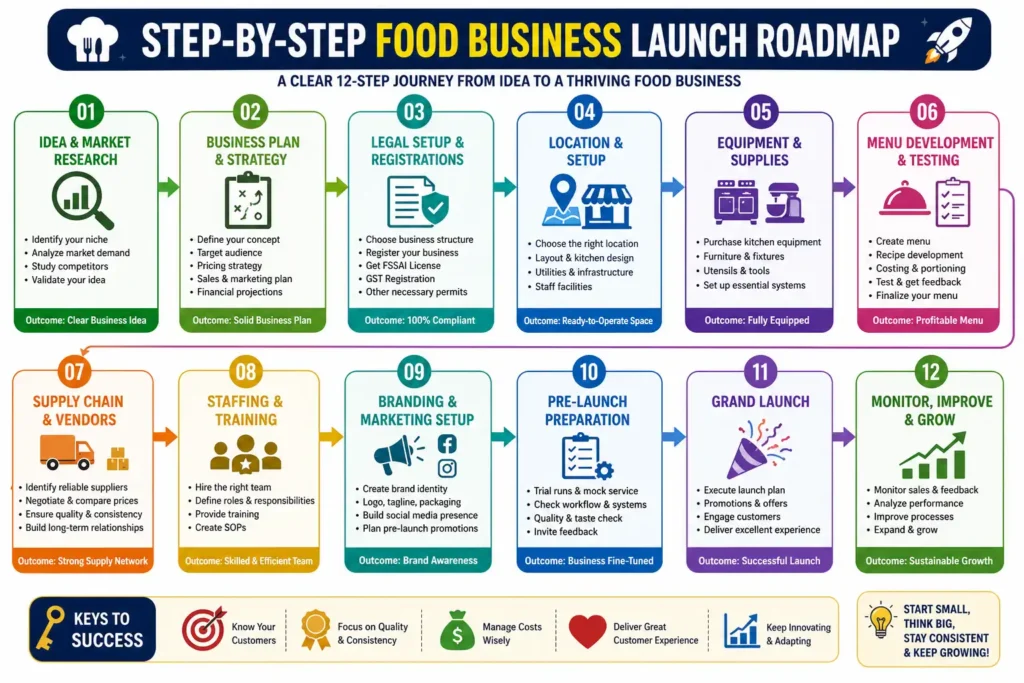
Choosing one of the best food business ideas is only the beginning. The real success depends on careful planning, consistent execution, excellent customer service, and continuous improvement. This step-by-step guide will help you build a food business that is legally compliant, operationally efficient, and profitable.
Step 1: Select Your Food Niche
Instead of selling everything, specialize in a category that matches your expertise and market demand.
Popular niches include:
- Bakery
- Healthy meals
- Regional cuisine
- Fast food
- Street food
- Organic products
- Frozen foods
- Desserts
- Premium chocolates
- Pickles
- Meal subscriptions
Choosing a niche helps build a stronger brand and makes your marketing more effective.
Step 2: Understand Your Target Customers
Your menu, pricing, packaging, and marketing should match your target audience.
| Customer Segment | Popular Products |
|---|---|
| Office Employees | Lunch boxes, coffee, sandwiches |
| Students | Burgers, fries, momos, shakes |
| Families | Bakery products, desserts, groceries |
| Fitness Enthusiasts | Protein meals, salads, smoothies |
| Senior Citizens | Low-oil meals, healthy snacks |
| Children | Cupcakes, chocolates, cookies |
Create a customer profile that includes:
- Age
- Income
- Food preferences
- Spending habits
- Preferred ordering method
- Favorite social media platform
Step 3: Conduct Market Research
Research before investing.
Study:
- Competitors
- Customer reviews
- Pricing
- Delivery time
- Product quality
- Popular menu items
- Peak business hours
Visit successful businesses personally and observe:
- Customer traffic
- Waiting time
- Packaging
- Staff behavior
- Interior design
- Product presentation
Your goal is not to copy competitors but to identify opportunities they have missed.
Step 4: Write a Business Plan
A business plan acts as your roadmap.
Include:
- Business objective
- Target market
- Product list
- Startup cost
- Equipment cost
- Monthly expenses
- Revenue forecast
- Marketing strategy
- Growth plan
- Risk analysis
A detailed business plan also helps if you later apply for loans or seek investors.
Estimate Your Startup Budget
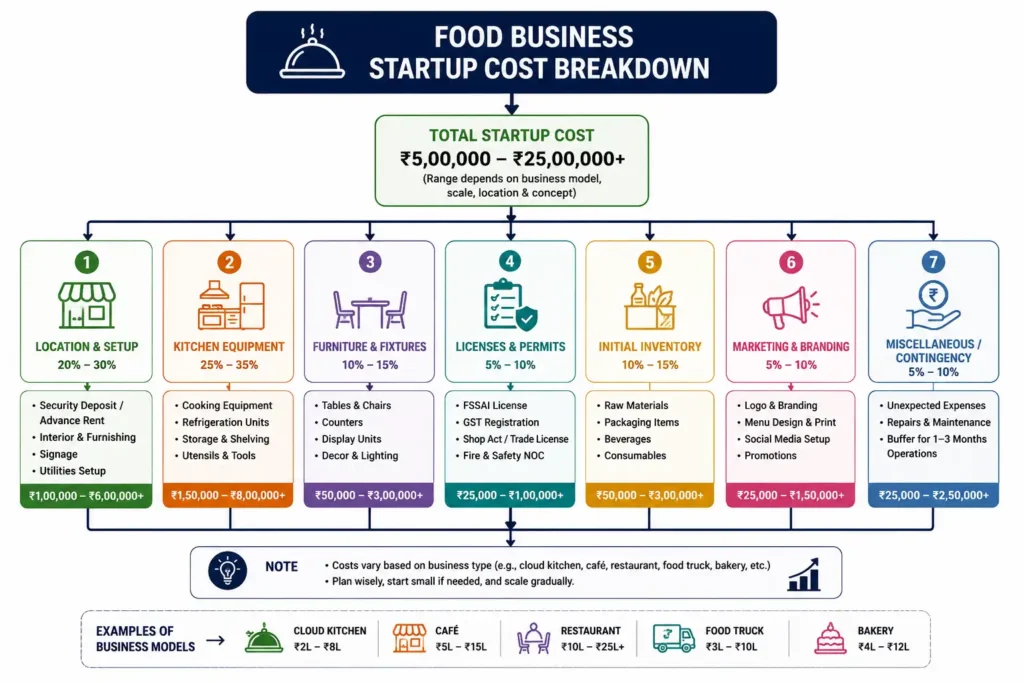
Prepare a realistic estimate before launching.
| Expense | Estimated Cost (₹) |
|---|---|
| Kitchen Equipment | 50,000–5,00,000 |
| Furniture | 20,000–3,00,000 |
| Initial Raw Materials | 20,000–2,00,000 |
| Packaging | 10,000–1,00,000 |
| Branding & Logo | 5,000–50,000 |
| Website | 10,000–1,00,000 |
| Marketing | 20,000–2,00,000 |
| Licenses | 5,000–50,000 |
| Working Capital | 1–6 Months |
Always keep an emergency fund equal to at least three months of operating expenses.
Select the Right Business Name
Your brand name should be:
- Easy to remember
- Easy to pronounce
- Unique
- Available as a domain name
- Available on social media
Avoid names that are difficult to spell.
Brand Identity Checklist
- Logo
- Brand colors
- Typography
- Packaging design
- Brand story
- Brand slogan
Strong branding helps customers remember your business.
Register Your Food Business
Operating legally increases customer trust and avoids future penalties.
Depending on your location and business type, you may need:
- FSSAI Registration or License
- GST Registration
- Shop and Establishment Registration
- Trade License
- Municipal approvals
- Fire Safety Clearance (for larger establishments)
- Pollution clearance (where applicable)
- Trademark registration (recommended)
- MSME Registration (recommended)
Understanding FSSAI Registration
Every food business operator should understand the applicable food safety requirements before starting operations.
Generally, businesses may fall into different categories depending on turnover and scale.
| Registration Type | Suitable For |
|---|---|
| Basic Registration | Small food businesses |
| State License | Medium-sized businesses |
| Central License | Large businesses operating across multiple states or under specific regulatory criteria |
Benefits of Registration
- Customer trust
- Legal compliance
- Easier business expansion
- Better opportunities with online marketplaces
- Ability to work with retailers and supermarkets
Should You Register for GST?
GST registration requirements depend on your turnover, business model, and applicable tax laws.
Advantages include:
- Better business credibility
- Ability to claim input tax credits where applicable
- Easier partnerships with corporate clients
- Expansion through organized retail
Consult a qualified tax professional to determine whether GST registration is required for your business.
Open a Business Bank Account
Avoid mixing personal and business finances.
Maintain separate accounts for:
- Sales
- Expenses
- Taxes
- Vendor payments
- Employee salaries
This simplifies accounting and improves financial management.
Choose the Right Business Model
Different business models suit different entrepreneurs.
| Model | Investment | Scalability | Risk |
|---|---|---|---|
| Home Kitchen | Low | Medium | Low |
| Cloud Kitchen | Medium | High | Medium |
| Food Cart | Low | Medium | Low |
| Restaurant | High | High | High |
| Food Truck | Medium | High | Medium |
| Manufacturing | High | Very High | Medium |
Choose a model that matches your budget and long-term goals.
Find Reliable Suppliers
Good suppliers directly affect your food quality.
Evaluate suppliers based on:
- Product quality
- Delivery reliability
- Price stability
- Payment terms
- Return policy
- Certifications
Never depend on a single supplier.
Maintain at least two backup suppliers for essential ingredients.
Purchase the Right Equipment
The equipment you need depends on your business type.
Bakery
- Oven
- Mixer
- Refrigerator
- Baking trays
- Cake decorating tools
Cloud Kitchen
- Commercial stove
- Exhaust system
- Refrigeration
- Storage racks
- Preparation tables
Beverage Business
- Blender
- Juicer
- Ice machine
- Refrigerator
- Water purifier
Restaurant
- Commercial burners
- Deep fryer
- Dishwasher
- Freezer
- POS system
Invest in durable equipment that reduces maintenance costs over time.
Design an Efficient Kitchen Layout
A well-planned kitchen improves productivity and food safety.
Ideal workflow:
Raw Material Receiving → Storage → Preparation → Cooking → Quality Check → Packaging → Dispatch
Separate raw and cooked food areas to reduce contamination risks.
Develop a Profitable Menu
Avoid launching with an oversized menu.
Start with:
- 10–20 best-selling products
- High-margin items
- Fast preparation recipes
- Limited ingredients
Gradually expand based on customer demand.
Tips for Menu Design
- Highlight signature dishes.
- Place high-profit items at the top.
- Include attractive food descriptions.
- Use professional food photography.
- Introduce seasonal specials.
Standardize Every Recipe
Customers expect the same taste every time they order.
Create recipe cards that include:
- Ingredient quantities
- Cooking time
- Temperature
- Portion size
- Garnishing instructions
- Packaging instructions
Standardization improves consistency and reduces food waste.
Maintain Food Safety and Hygiene
Food safety should never be compromised.
Daily checklist:
- Wash hands regularly.
- Sanitize kitchen surfaces.
- Store ingredients at appropriate temperatures.
- Rotate stock using FIFO (First In, First Out).
- Check expiry dates daily.
- Wear clean uniforms and hairnets.
- Use separate cutting boards for different food categories where appropriate.
- Dispose of waste properly.
Excellent hygiene leads to better reviews and stronger customer loyalty.
Build a Reliable Team
Hire people with the right attitude, then train them thoroughly.
Key roles may include:
- Chef
- Kitchen assistants
- Delivery coordinator
- Cashier
- Customer support
- Store manager
- Marketing executive
Provide regular training on:
- Hygiene
- Customer service
- Food preparation
- Safety procedures
Choose High-Quality Packaging
Packaging protects food and influences customer perception.
Good packaging should be:
- Leak-proof
- Food-safe
- Durable
- Attractive
- Eco-friendly
- Brandable
Include:
- Brand logo
- Product name
- Ingredients (where applicable)
- Manufacturing date
- Best-before date
- Contact details
- QR code linking to your website or menu
Premium packaging often encourages repeat purchases and social media sharing.
Expert Tips Before Launch
- Test your products with family, friends, and a small group of target customers before a full launch.
- Document all recipes and operating procedures from day one.
- Invest in quality ingredients rather than trying to compete solely on price.
- Build a customer database to support repeat marketing.
- Monitor daily sales, food costs, and customer feedback to make data-driven improvements.
- Focus on delivering a consistent customer experience, as repeat customers are often more valuable than acquiring new ones.
How to Price Your Food Correctly
Pricing is one of the most important factors in the success of any food business ideas. Setting prices too low reduces profits, while pricing too high can discourage customers. A successful pricing strategy should cover all costs and still leave enough room for healthy profits.
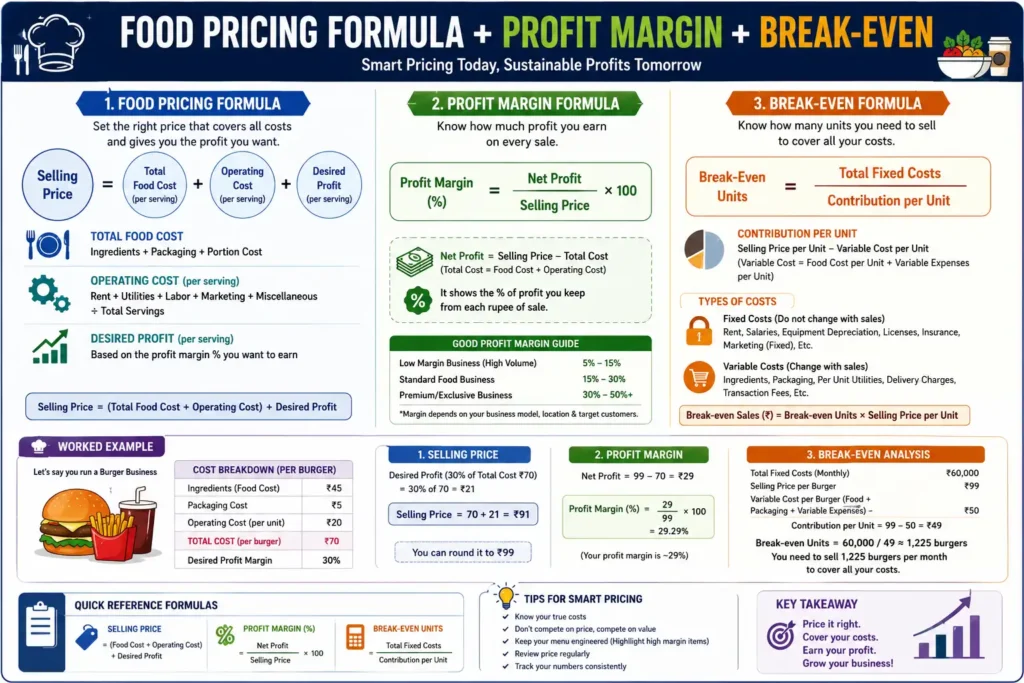
Your selling price should include:
- Raw material cost
- Packaging cost
- Labor cost
- Utility expenses
- Delivery charges
- Marketing expenses
- Platform commission
- Taxes (where applicable)
- Desired profit
Simple Food Pricing Formula
Selling Price = Total Cost + Desired Profit
For example:
| Expense | Amount (₹) |
|---|---|
| Ingredients | 70 |
| Packaging | 15 |
| Labor | 20 |
| Electricity & Gas | 10 |
| Delivery | 15 |
| Total Cost | 130 |
| Desired Profit | 70 |
| Final Selling Price | ₹200 |
This approach ensures that every order contributes to your business growth instead of merely covering costs.
Understanding Food Cost Percentage
Professional restaurants closely monitor food cost percentage.
Formula
Food Cost Percentage = (Food Cost ÷ Selling Price) × 100
Example:
Selling Price = ₹300
Food Cost = ₹90
Food Cost Percentage = 30%
A lower food cost percentage generally allows higher profitability, provided quality remains high.
Calculate Your Gross Profit Margin
Gross profit helps you understand how much money remains after covering direct production costs.
Formula
Gross Profit = Selling Price − Cost of Goods Sold
Example:
Selling Price = ₹500
Production Cost = ₹250
Gross Profit = ₹250
Gross Margin = 50%
Track this number for every menu item.
Break-even Analysis
Break-even tells you how many products you must sell before earning profit.
Example
Monthly Fixed Expenses
| Expense | Monthly Cost (₹) |
|---|---|
| Rent | 30,000 |
| Salaries | 80,000 |
| Utilities | 15,000 |
| Marketing | 20,000 |
| Miscellaneous | 15,000 |
| Total Fixed Cost | ₹1,60,000 |
If your average profit per order is ₹200:
Break-even Orders = ₹1,60,000 ÷ ₹200 = 800 orders per month
Knowing your break-even point helps set realistic sales targets.
Increase Average Order Value
Increasing the average bill size is often easier than acquiring new customers.
Effective Strategies
- Create combo meals.
- Offer premium upgrades.
- Introduce family packs.
- Recommend desserts.
- Suggest beverages.
- Provide meal subscriptions.
- Offer festive gift boxes.
- Bundle complementary products.
Example
Instead of selling:
Burger = ₹150
Sell:
Burger + Fries + Drink = ₹249
Customers perceive greater value, while your profit per order increases.
Build a Strong Brand Identity
Customers often remember brands before they remember products.
Your brand should include:
- Memorable business name
- Professional logo
- Consistent color palette
- Attractive packaging
- Brand story
- Tagline
- Brand voice
A recognizable brand builds trust and encourages repeat purchases.
Create Attractive Food Packaging
Packaging influences purchasing decisions and social media sharing.
Good Packaging Should Be
- Food-safe
- Leak-proof
- Eco-friendly
- Microwave-safe (where appropriate)
- Easy to carry
- Visually appealing
Information to Include
- Brand logo
- Product name
- Ingredients
- Nutritional information (where applicable)
- Manufacturing date
- Best-before date
- Storage instructions
- Contact details
- QR code
- Social media handles
Premium packaging often justifies premium pricing.
Build Your Online Presence
Most customers discover food businesses online before visiting or ordering.
Essential digital assets include:
- Website
- Google Business Profile
- Instagram page
- Facebook page
- WhatsApp Business
- YouTube channel
- Email newsletter
Ensure branding is consistent across all platforms.
Create a Professional Website
Your website should include:
- Home page
- About Us
- Menu
- Online ordering
- Contact page
- Customer reviews
- Frequently Asked Questions
- Blog
- Delivery information
- Privacy Policy
A fast, mobile-friendly website also improves search engine visibility.
Optimize Your Google Business Profile
A complete Google Business Profile can drive local traffic without paid advertising.
Complete Every Section
- Business name
- Address
- Phone number
- Website
- Opening hours
- Menu
- Photos
- Services
- Products
- Customer reviews
Tips
- Upload fresh photos every week.
- Respond to every review.
- Add posts about new products and offers.
- Keep business information updated.
Instagram Marketing Strategy
Instagram is one of the most powerful platforms for food businesses because food is highly visual.
Content Ideas
- Behind-the-scenes videos
- Cooking process
- Customer testimonials
- Product launches
- Daily specials
- Reels
- Recipes
- Chef introductions
- Before-and-after plating
- Festival offers
Posting Frequency
- Reels: 4–6 per week
- Stories: Daily
- Feed posts: 3–4 per week
- Live sessions: 2–4 per month
Consistency is more important than volume.
Facebook Marketing
Facebook remains effective for reaching local communities.
Use it to promote:
- Special discounts
- Festival menus
- Catering services
- Customer reviews
- Events
- Community groups
WhatsApp Business Marketing
WhatsApp Business is ideal for retaining customers.
Features to Use
- Product catalog
- Quick replies
- Automated welcome messages
- Broadcast lists
- Order confirmations
- Delivery updates
Send promotions sparingly to avoid overwhelming customers.
Sell Through Food Delivery Platforms
Delivery platforms can significantly increase your reach.
Before Registering
Prepare:
- FSSAI details
- Bank account
- GST details (if applicable)
- Menu
- High-quality product photos
- Pricing
- Packaging
Success Tips
- Maintain high ratings.
- Deliver on time.
- Use quality packaging.
- Respond quickly to complaints.
- Regularly review customer feedback.
Local Marketing Strategies
Offline marketing is still valuable, especially for new businesses.
Ideas
- Apartment promotions
- Office sampling
- College events
- Local exhibitions
- Food festivals
- Society events
- Corporate tie-ups
- Gym partnerships
Word-of-mouth remains one of the most effective marketing channels.
Referral Marketing
Satisfied customers can become your best salespeople.
Offer rewards such as:
- ₹100 discount for referrals
- Free dessert
- Loyalty points
- Cashback coupons
- Birthday offers
Referral programs often have a lower customer acquisition cost than paid advertising.
Customer Loyalty Programs
Acquiring a new customer generally costs more than retaining an existing one.
Examples include:
- Buy 9 coffees, get the 10th free
- Monthly meal subscriptions
- VIP membership
- Birthday rewards
- Festival coupons
- Early access to new products
Loyal customers also tend to spend more over time.
Email Marketing
Email is useful for businesses with repeat customers.
Send:
- New menu announcements
- Festival offers
- Discount coupons
- Recipe newsletters
- Product launches
- Customer surveys
Avoid sending too many promotional emails.
Collect Customer Reviews
Positive reviews improve trust and online visibility.
Encourage reviews by:
- Including a QR code on packaging
- Sending follow-up messages
- Offering loyalty points
- Responding politely to all feedback
Never purchase fake reviews, as they can damage your reputation.
Handle Customer Complaints Professionally
Every complaint is an opportunity to improve.
Best practices:
- Respond quickly.
- Listen carefully.
- Apologize when appropriate.
- Offer a practical solution.
- Follow up after resolving the issue.
- Record recurring issues and address their root cause.
Excellent customer service often turns dissatisfied customers into loyal supporters.
AI Tools Every Food Business Should Use
Artificial intelligence can automate routine tasks and improve efficiency.
Useful applications include:
- AI menu creation
- Inventory forecasting
- Sales analytics
- Customer support chatbots
- Social media content generation
- Image enhancement
- Demand forecasting
- Personalized marketing
- Review sentiment analysis
Use AI to support decision-making while maintaining human oversight.
Inventory Management
Poor inventory control leads to waste and reduced profits.
Best Practices
- Track stock daily.
- Use FIFO (First In, First Out).
- Monitor expiry dates.
- Forecast demand using historical sales.
- Reduce slow-moving inventory.
- Conduct regular stock audits.
Inventory software can simplify these tasks as your business grows.
Reduce Food Waste
Reducing waste improves profitability and supports sustainability.
Strategies include:
- Accurate demand forecasting
- Portion control
- Menu engineering
- Repurposing suitable ingredients safely
- Supplier optimization
- Daily inventory reviews
Even small reductions in waste can significantly improve margins.
Expand Your Food Business
Once your first outlet or product line becomes profitable, consider expansion.
Options include:
- Additional locations
- Cloud kitchens
- Franchising
- Packaged food products
- Wholesale distribution
- Online marketplaces
- Export opportunities
- Corporate catering
- Subscription services
Expand only after establishing consistent operations and healthy cash flow.
Key Performance Indicators (KPIs) to Track
Measure performance regularly.
| KPI | Why It Matters |
|---|---|
| Daily Sales | Tracks revenue growth |
| Average Order Value | Measures customer spending |
| Gross Profit Margin | Evaluates profitability |
| Net Profit Margin | Shows overall business health |
| Food Cost Percentage | Controls ingredient expenses |
| Customer Retention Rate | Indicates customer loyalty |
| Repeat Purchase Rate | Measures satisfaction |
| Delivery Time | Impacts customer experience |
| Customer Rating | Builds online reputation |
| Inventory Turnover | Improves stock management |
Review these metrics weekly or monthly to make informed decisions.
Future Trends in the Food Industry
The food industry is evolving rapidly. Entrepreneurs who adapt early can gain a competitive advantage.
Key trends include:
- Plant-based foods
- Functional and fortified foods
- Protein-rich snacks
- Organic and chemical-free products
- Millet-based products
- Sustainable packaging
- Smart kitchens
- AI-assisted operations
- Hyperlocal delivery
- Personalized nutrition
- Ready-to-cook premium meals
- Subscription-based food services
Keeping pace with these trends can help future-proof your business and attract new customer segments.
Expert Success Tips
- Start small, but think long term.
- Prioritize product quality over rapid expansion.
- Standardize recipes and processes.
- Build a memorable brand from day one.
- Monitor your financial performance regularly.
- Embrace digital marketing and online ordering.
- Invest in customer relationships, not just customer acquisition.
- Stay compliant with applicable food safety and business regulations.
- Continuously innovate based on customer feedback and market trends.
Common Mistakes That Can Ruin a Food Business
Even the best food business ideas can fail if common mistakes are ignored. Learning from the experience of successful entrepreneurs can save both time and money.
Starting Without Market Research
Many entrepreneurs invest in equipment and inventory before confirming whether customers actually want their products.
Solution
- Conduct customer surveys.
- Study local competitors.
- Test products with a small audience.
- Launch a minimum viable menu before expanding.
Trying to Sell Too Many Products
A large menu often increases food waste, inventory costs, and preparation time.
Solution
Start with 10–20 signature products and expand only after identifying customer favorites.
Ignoring Food Quality
Customers may forgive a delayed delivery once, but they rarely return after a poor food experience.
Solution
- Use fresh ingredients.
- Standardize recipes.
- Perform regular quality checks.
- Train staff consistently.
Poor Financial Management
Many food businesses fail because owners focus only on sales instead of profitability.
Track:
- Daily sales
- Gross profit
- Net profit
- Food cost percentage
- Inventory value
- Cash flow
Weak Branding
Without a recognizable brand, customers may forget your business.
Invest in:
- Professional logo
- Premium packaging
- Brand colors
- Social media identity
- Consistent messaging
Ignoring Customer Feedback
Reviews provide valuable information about your strengths and weaknesses.
Always:
- Thank customers for positive reviews.
- Respond politely to negative reviews.
- Implement practical improvements.
Poor Hygiene Standards
Food safety directly affects customer trust.
Create daily hygiene checklists and train every employee to follow them.
No Marketing Strategy
Many businesses assume good food alone will attract customers.
Successful businesses consistently market themselves through:
- Google Business Profile
- WhatsApp Business
- Local events
- Referral programs
- Email marketing
Food Business Success Stories
Local Home Bakery to National Brand
A home baker began by selling customized birthday cakes through Instagram. After receiving consistent orders, she launched a dedicated website, partnered with delivery services, and later opened a production kitchen. Today, her products are available in multiple cities through online orders.
Key Lesson: Build a loyal customer base before expanding.
Tiffin Service Turned Corporate Catering
A family started by delivering homemade lunches to a few office workers. Positive word-of-mouth led to contracts with nearby companies, eventually expanding into corporate catering and event meal services.
Key Lesson: Repeat customers can become your strongest growth engine.
Pickle Business to Export Brand
A traditional family recipe became the foundation of a packaged pickle brand. With improved packaging, food safety compliance, and online marketing, the business expanded into supermarkets and international markets.
Key Lesson: Authentic products combined with professional branding can compete with established brands.
90-Day Food Business Launch Roadmap
Days 1–15: Planning
- Choose your niche.
- Study competitors.
- Identify target customers.
- Finalize your business model.
- Estimate startup costs.
- Create a business plan.
Days 16–30: Branding and Legal Setup
- Select a business name.
- Design your logo.
- Register your business.
- Obtain required licenses.
- Open a business bank account.
- Purchase your domain name.
Days 31–45: Product Development
- Finalize recipes.
- Standardize portions.
- Test products with friends and family.
- Improve packaging.
- Calculate pricing.
Days 46–60: Setup
- Purchase equipment.
- Arrange suppliers.
- Organize the kitchen.
- Build your website.
- Create social media accounts.
- Set up payment systems.
Days 61–75: Soft Launch
- Accept limited orders.
- Collect customer feedback.
- Improve operations.
- Refine your menu.
- Build customer testimonials.
Days 76–90: Official Launch
- Announce your launch on social media.
- Run introductory offers.
- Partner with local influencers.
- Register on delivery platforms.
- Begin referral and loyalty programs.
One-Year Growth Plan
Quarter 1
Focus on:
- Product quality
- Customer reviews
- Brand awareness
- Operational consistency
Quarter 2
Expand by:
- Adding new products
- Improving packaging
- Increasing digital marketing
- Introducing subscription plans
Quarter 3
Scale through:
- Corporate partnerships
- Local retail stores
- Online marketplaces
- Bulk orders
Quarter 4
Prepare for long-term growth:
- Open another outlet or cloud kitchen.
- Introduce packaged products.
- Explore franchising opportunities.
- Invest in automation and inventory software.
Food Business Launch Checklist
Before accepting your first customer order, confirm that you have completed the following:
Business Planning
- Business plan completed
- Target audience identified
- Competitor analysis finished
- Startup budget finalized
Legal Compliance
- Food business registration completed
- Required food safety registration or license obtained
- Applicable tax registrations completed
- Business bank account opened
Operations
- Suppliers selected
- Equipment installed
- Kitchen organized
- Recipes standardized
- Pricing finalized
- Packaging ready
Branding
- Business name finalized
- Logo designed
- Packaging printed
- Website launched
- Social media profiles created
Marketing
- Google Business Profile created
- Product photos completed
- Promotional offers prepared
- Referral program launched
- Customer review process established
Frequently Asked Questions
Which food business is the most profitable?
Businesses such as cloud kitchens, premium bakeries, healthy meal subscriptions, chocolate brands, spice manufacturing, pickle businesses, and catering services generally offer strong profit potential when managed efficiently.
Can I start a food business from home?
Yes. Many entrepreneurs begin with home bakeries, tiffin services, homemade snacks, pickles, chocolates, and spice blends before expanding into larger operations.
How much investment is required to start a food business?
It depends on the business model. Some home-based businesses can begin with ₹20,000–₹50,000, while restaurants and manufacturing units may require several lakh rupees or more.
Which food business requires the lowest investment?
Tea stalls, popcorn carts, homemade pickles, papad businesses, lemonade carts, and tiffin services typically require relatively low initial investment.
Which food business has the highest growth potential?
Cloud kitchens, healthy food brands, protein snacks, millet products, organic foods, gourmet bakeries, ready-to-cook meals, and subscription meal services are among the fastest-growing segments.
Is a food business suitable for beginners?
Yes. Many businesses such as home bakeries, tiffin services, tea stalls, and homemade snack businesses are beginner-friendly and can be expanded gradually.
How important is branding in the food industry?
Branding plays a major role in customer recognition, trust, repeat purchases, and premium pricing. Strong branding can differentiate your products even in competitive markets.
Should I create a website if I sell through social media?
Yes. A website increases credibility, supports search engine visibility, enables direct orders, and gives you greater control over your brand.
How can I attract repeat customers?
Focus on consistent quality, excellent customer service, loyalty programs, referral rewards, personalized communication, and regular product innovation.
How can I reduce food waste?
Plan inventory carefully, forecast demand, standardize recipes, rotate stock using FIFO, and regularly analyze sales data to minimize excess inventory.
Key Takeaways
- The food industry offers opportunities for entrepreneurs with almost any budget.
- Start with a focused niche and build expertise before expanding.
- Prioritize quality, hygiene, and consistency to earn customer trust.
- Invest in professional branding and attractive packaging.
- Use digital marketing and online ordering to reach more customers.
- Monitor financial metrics such as food cost percentage, profit margins, and break-even point.
- Adapt to emerging trends like healthy foods, cloud kitchens, sustainable packaging, and AI-powered operations.
- Build systems and processes that allow your business to scale efficiently.
Final Thoughts
The food industry continues to be one of the most rewarding sectors for entrepreneurs willing to combine passion with careful planning. Whether you choose a home bakery, cloud kitchen, catering company, packaged food brand, or another of the many food business ideas covered in this guide, long-term success depends on delivering consistent quality, understanding your customers, and continuously improving your operations.
Start with a business model that matches your budget and skills. Test your products with real customers, gather feedback, refine your processes, and expand only after building a solid foundation. Small, consistent improvements in quality, customer experience, and marketing often create sustainable businesses that grow steadily over time.
By following the strategies, checklists, and practical advice in this guide, you will be well prepared to launch, manage, and scale a successful food business in 2026 and beyond.
Expert’s Recommendation
If you’re starting your first venture, these five food business ideas offer an excellent balance of investment, demand, scalability, and profitability:
| Rank | Food Business Idea | Investment | Scalability | Overall Rating |
|---|---|---|---|---|
| 1 | Cloud Kitchen | Medium | ⭐⭐⭐⭐⭐ | ⭐⭐⭐⭐⭐ |
| 2 | Home Bakery | Low–Medium | ⭐⭐⭐⭐⭐ | ⭐⭐⭐⭐⭐ |
| 3 | Healthy Meal Subscription | Medium | ⭐⭐⭐⭐⭐ | ⭐⭐⭐⭐⭐ |
| 4 | Homemade Pickle & Spice Brand | Low | ⭐⭐⭐⭐⭐ | ⭐⭐⭐⭐☆ |
| 5 | Premium Tea & Coffee Café | Medium | ⭐⭐⭐⭐☆ | ⭐⭐⭐⭐☆ |
These business models align well with current consumer trends, offer multiple expansion opportunities, and can evolve into recognizable brands with the right execution