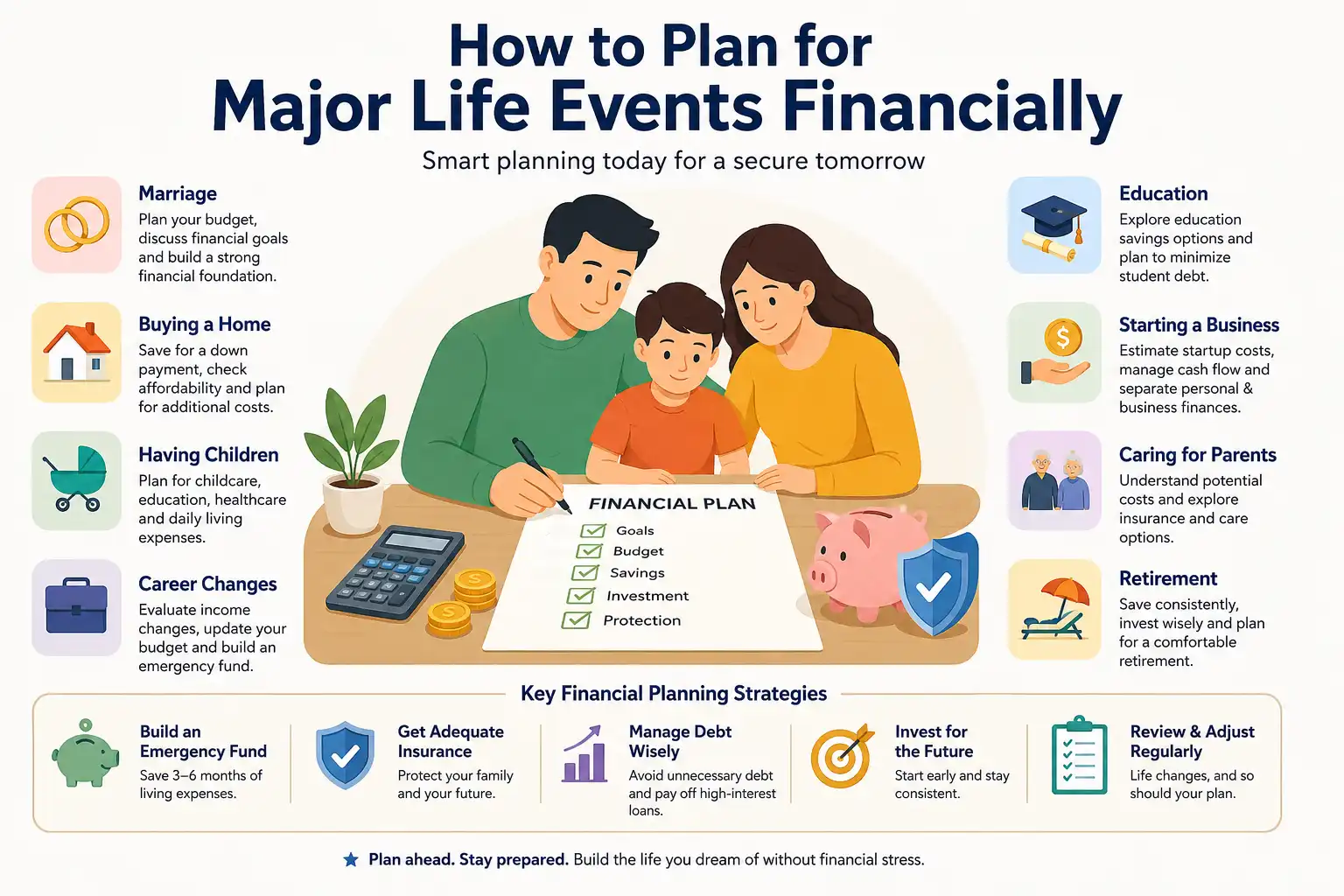
Life is full of exciting milestones and unexpected challenges. From getting married and buying a home to having children, changing careers, or preparing for retirement, major life events often come with significant financial responsibilities. While these moments can be rewarding, they can also create financial stress if you are not prepared.
Financial planning helps you navigate important life changes with confidence. Instead of reacting to expenses after they occur, proper planning allows you to prepare in advance, protect your finances, and stay focused on your long-term goals.
According to financial experts, individuals who create a structured financial plan before major life events are often better equipped to handle unexpected costs and maintain financial stability. Planning ahead not only reduces financial pressure but also helps you make smarter decisions during important transitions.
In this guide, we will discuss how to financially prepare for major life events, common financial challenges people face, and practical strategies to help you stay on track throughout every stage of life.
Why Financial Planning for Life Events Is Important
Major life events can significantly affect your income, expenses, savings, and financial goals.
Without proper planning, you may experience:
- Increased debt
- Financial stress
- Delayed goals
- Cash flow problems
- Reduced savings
Financial preparation helps you:
- Build confidence
- Reduce financial uncertainty
- Protect your assets
- Achieve long-term goals
- Improve financial security
Planning ahead allows you to focus on enjoying life’s milestones rather than worrying about money.
Start with a Clear Financial Roadmap
Before planning for any specific event, it is important to understand your overall financial situation.
Evaluate Your Current Finances
Review:
- Monthly income
- Expenses
- Savings
- Investments
- Debt obligations
- Insurance coverage
Understanding where you stand financially helps identify areas that need improvement.
Set Financial Goals
Create both short-term and long-term goals.
Examples include:
- Saving for a wedding
- Purchasing a home
- Building an emergency fund
- Funding education
- Planning retirement
Clear goals make financial planning more effective.
Build a Strong Emergency Fund
An emergency fund is one of the most important financial tools for managing life transitions.
Unexpected costs often arise during major life events.
Examples include:
- Medical expenses
- Home repairs
- Job loss
- Family emergencies
How Much Should You Save?
Financial advisors generally recommend saving:
- Three to six months of living expenses
Individuals with variable income may consider maintaining larger emergency reserves.
A healthy emergency fund prevents the need for high-interest borrowing during unexpected situations.
Financial Planning for Marriage
Marriage is both an emotional and financial partnership.
Open communication about money is essential before and after marriage.
Discuss Financial Expectations
Couples should discuss:
- Income levels
- Spending habits
- Savings goals
- Debt obligations
- Future financial plans
Create a Joint Budget
A shared budget helps manage:
- Household expenses
- Savings goals
- Debt payments
- Lifestyle spending
Update Financial Documents
Review:
- Beneficiary designations
- Insurance policies
- Estate planning documents
Financial transparency helps build trust and long-term stability.
Planning Financially for Buying a Home
Buying a home is one of the largest financial decisions most people make.
Save for a Down Payment
The larger the down payment, the lower the borrowing requirement.
Consider Additional Costs
Homeownership includes expenses beyond the purchase price.
Examples include:
- Property taxes
- Insurance
- Maintenance
- Utility costs
- Closing fees
Improve Your Credit Profile
A strong credit score can help secure better mortgage terms and lower interest rates.
Careful preparation reduces financial pressure after purchasing a home.
Preparing for Parenthood
Having children is a life-changing experience that also increases financial responsibilities.
Estimate Child-Related Expenses
Costs may include:
- Medical care
- Childcare
- Education
- Clothing
- Daily living expenses
Review Insurance Coverage
Parents should evaluate:
- Health insurance
- Life insurance
- Disability insurance
Start Saving Early
Education savings and long-term investments can help prepare for future expenses.
Early planning allows parents to manage costs more effectively.
Financial Planning for Career Changes
Changing jobs or starting a business can impact financial stability.
Maintain Cash Reserves
Career transitions may temporarily reduce income.
Emergency savings provide financial flexibility during this period.
Evaluate Benefits
Compare:
- Health insurance
- Retirement plans
- Bonuses
- Paid leave policies
Update Your Budget
Adjust spending to reflect changes in income and expenses.
Proper planning can reduce stress during career transitions.
Planning for Higher Education
Education can create valuable opportunities, but it often comes with significant costs.
Estimate Total Expenses
Consider:
- Tuition
- Books
- Housing
- Transportation
- Living expenses
Explore Funding Options
Potential resources include:
- Scholarships
- Grants
- Savings accounts
- Education investment plans
Avoid Excessive Borrowing
Student debt can impact future financial goals.
Develop a realistic funding strategy before enrollment.
Financial Preparation for Starting a Business
Entrepreneurship can be rewarding, but it also involves financial risks.
Separate Personal and Business Finances
Maintain dedicated accounts for business activities.
Create a Business Budget
Estimate:
- Startup costs
- Operating expenses
- Marketing costs
- Revenue projections
Build a Financial Safety Net
New businesses often take time to become profitable.
Having adequate savings helps manage uncertainty during the early stages.
Planning for Healthcare Expenses
Medical costs can significantly impact financial stability.
Understand Your Health Insurance
Review:
- Coverage limits
- Deductibles
- Out-of-pocket expenses
Consider Supplemental Coverage
Depending on your situation, additional protection may be beneficial.
Maintain Health Savings
Setting aside funds for medical expenses can reduce financial stress during emergencies.
Healthcare planning is an essential component of long-term financial security.
Financial Planning for Retirement
Retirement planning should begin as early as possible.
The earlier you start, the more time your investments have to grow.
Determine Retirement Goals
Consider:
- Desired lifestyle
- Travel plans
- Healthcare needs
- Housing preferences
Estimate Future Expenses
Understanding future costs helps determine how much you need to save.
Invest Consistently
Regular contributions can benefit from long-term compounding.
Retirement planning is a lifelong process that requires regular review.
Preparing for Caring for Aging Parents
Many adults eventually become responsible for helping aging family members.
Discuss Financial Expectations Early
Open conversations can help avoid future misunderstandings.
Understand Potential Costs
Examples include:
- Medical care
- Assisted living
- Home modifications
- Long-term care services
Review Legal Documents
Important documents may include:
- Wills
- Powers of attorney
- Healthcare directives
Advance planning can help reduce emotional and financial stress.
Estate Planning and Wealth Transfer
Estate planning is not only for wealthy individuals.
It helps ensure your assets are distributed according to your wishes.
Essential Estate Planning Documents
Include:
- Will
- Power of attorney
- Healthcare directive
- Beneficiary designations
Review Plans Regularly
Major life events often require updates to estate planning documents.
Proper estate planning protects loved ones and simplifies future transitions.
The Importance of Insurance During Life Changes
Insurance provides financial protection against unexpected events.
Types of Insurance to Consider
Health Insurance
Protects against medical expenses.
Life Insurance
Provides support for dependents in the event of death.
Disability Insurance
Protects income if you become unable to work.
Home and Property Insurance
Protects valuable assets.
Insurance plays a critical role in financial risk management.
Managing Debt During Major Life Events
Large life changes can increase borrowing needs.
Prioritize High-Interest Debt
Pay down expensive debt whenever possible.
Avoid Excessive Borrowing
Only take on debt that aligns with your financial goals and repayment ability.
Maintain Good Credit
Strong credit can improve access to favorable financing options.
Responsible debt management supports long-term financial health.
Adjust Your Investment Strategy Over Time
Life events often affect financial priorities and risk tolerance.
Review Investments Regularly
Evaluate whether your portfolio remains aligned with your goals.
Consider Time Horizons
Different goals require different investment strategies.
For example:
- Short-term goals may require conservative investments.
- Long-term goals may support growth-oriented investments.
Periodic reviews help maintain alignment with changing circumstances.
Create Multiple Savings Goals
Many people save for only one financial objective at a time.
However, life often involves multiple goals simultaneously.
Examples include:
- Emergency savings
- Home purchase
- Education funding
- Vacation planning
- Retirement savings
Separate savings accounts or investment plans can help organize these goals.
Common Financial Mistakes to Avoid
Major life events often lead to emotional financial decisions.
Ignoring Budgeting
A lack of budgeting can create unnecessary financial stress.
Underestimating Costs
Many life events cost more than initially expected.
Delaying Planning
Waiting until the last minute reduces available options.
Neglecting Insurance
Insufficient coverage can create significant financial risk.
Failing to Update Financial Plans
Life changes should trigger financial reviews and adjustments.
Avoiding these mistakes improves financial stability and preparedness.
How Financial Advisors Can Help
Complex life events often require professional guidance.
A qualified financial advisor can assist with:
- Budgeting
- Investment planning
- Retirement strategies
- Tax planning
- Risk management
- Estate planning
Professional advice can provide valuable perspective and improve decision-making.
Creating a Long-Term Financial Mindset
Successful financial planning is not about reacting to events as they happen.
It involves building habits that support long-term success.
Focus on Consistency
Small actions performed consistently often create significant results over time.
Continue Learning
Financial education improves decision-making and confidence.
Review Plans Regularly
Life circumstances change, and financial plans should evolve accordingly.
A proactive mindset helps individuals stay prepared for future opportunities and challenges.
Conclusion
Major life events often bring excitement, opportunity, and change. However, they can also create significant financial responsibilities if not planned carefully. Whether you are getting married, buying a home, raising children, changing careers, starting a business, or preparing for retirement, financial planning helps you navigate these transitions with confidence.
By building an emergency fund, creating realistic budgets, managing debt responsibly, maintaining proper insurance coverage, and regularly reviewing your financial goals, you can strengthen your financial foundation and reduce uncertainty during life’s biggest moments.
The most effective financial plans are flexible, realistic, and regularly updated. By preparing early and making informed decisions, you can protect your financial future while fully enjoying the milestones that matter most.